
Why Sellers Wish They Had Used a Real Estate Agent
Curious about the number one mistake homeowners make when they sell without an agent? It’s mispricing their home for the current market.
Recent data from the National Association of Realtors (NAR) shows that sellers who went it alone say pricing their home correctly was the most challenging part of the entire process.
Top Challenges for Sellers Without an Agent:
Setting the right asking price
Getting the home ready or making repairs
Selling within their preferred timeline
Managing legal paperwork and contracts
Finding the time to handle every step of the sale
And it’s easy to see why pricing is so difficult. It’s not as simple as relying on an online estimate or copying last year’s sale down the street. Accurate pricing requires a clear understanding of:
What buyers are willing to pay right now
The level of competition in your market
What comparable homes are actually selling for
How desirable your neighborhood is
The overall condition of your home
Without this context, it’s easy to price too high—especially in a market where buyers have more choices. And when that happens, it often works against you.
Why Overpricing Creates Bigger Problems
Your asking price shapes a buyer’s first impression. When it’s too high, it can trigger a domino effect.
Buyers may pass over your home altogether, leading to fewer showings. Fewer showings usually result in fewer offers, which often forces a price reduction just to regain attention.
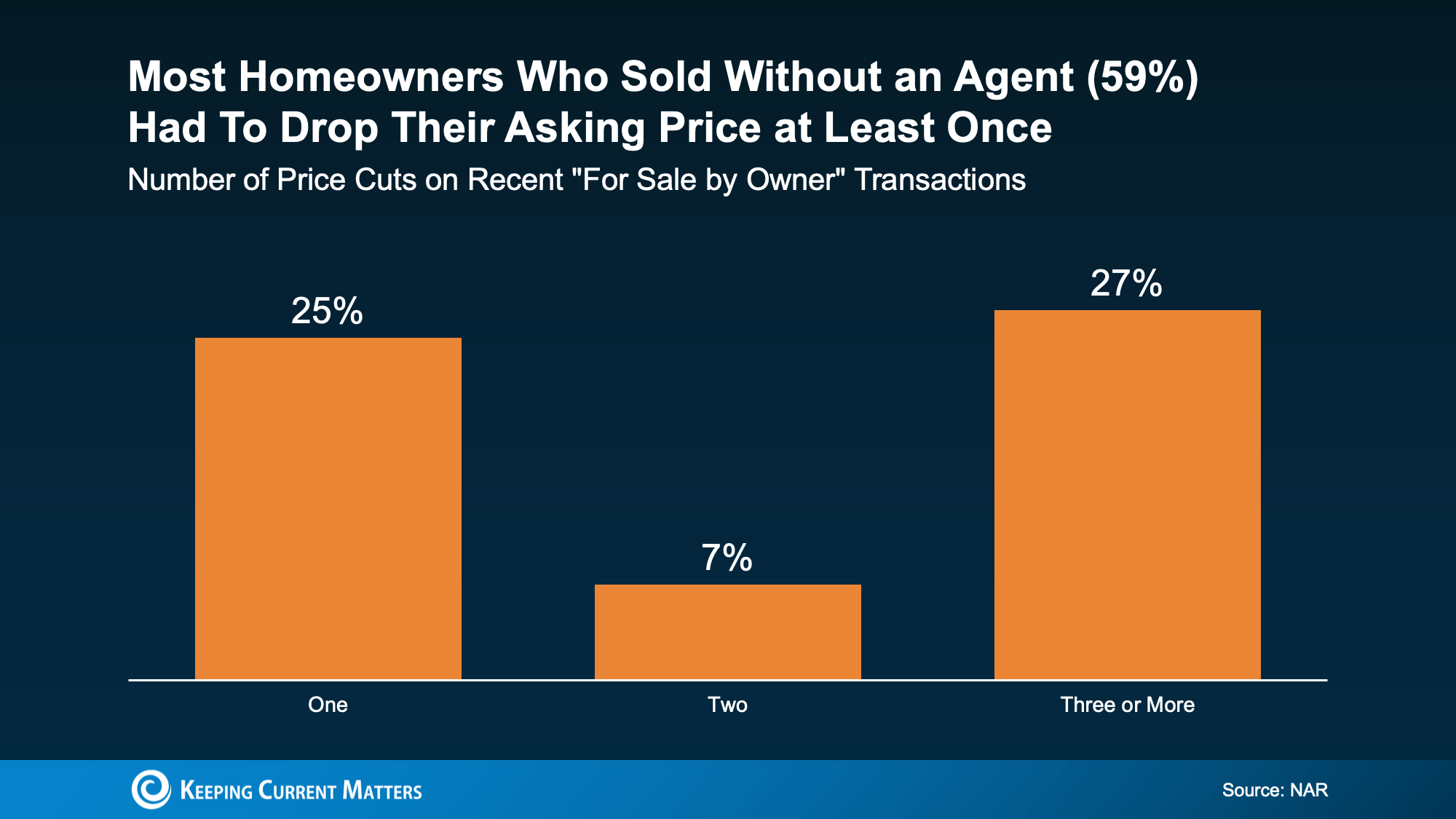
This scenario is becoming increasingly common, particularly for homes sold without professional representation. In fact, NAR reports that 59% of homes sold without an agent had to lower their asking price at least once.
The Unexpected Downside of Price Reductions
Unfortunately, cutting the price doesn’t always solve the issue. Instead, it can attract bargain hunters rather than serious buyers. Many buyers see a price drop as a red flag and assume something is wrong with the home—causing even more hesitation.
By the time the property sells, sellers may walk away with less than they would have if the home had been priced correctly from the beginning.
The numbers support this. According to NAR, homes sold with an agent typically sell for nearly 8% more than those sold without one.
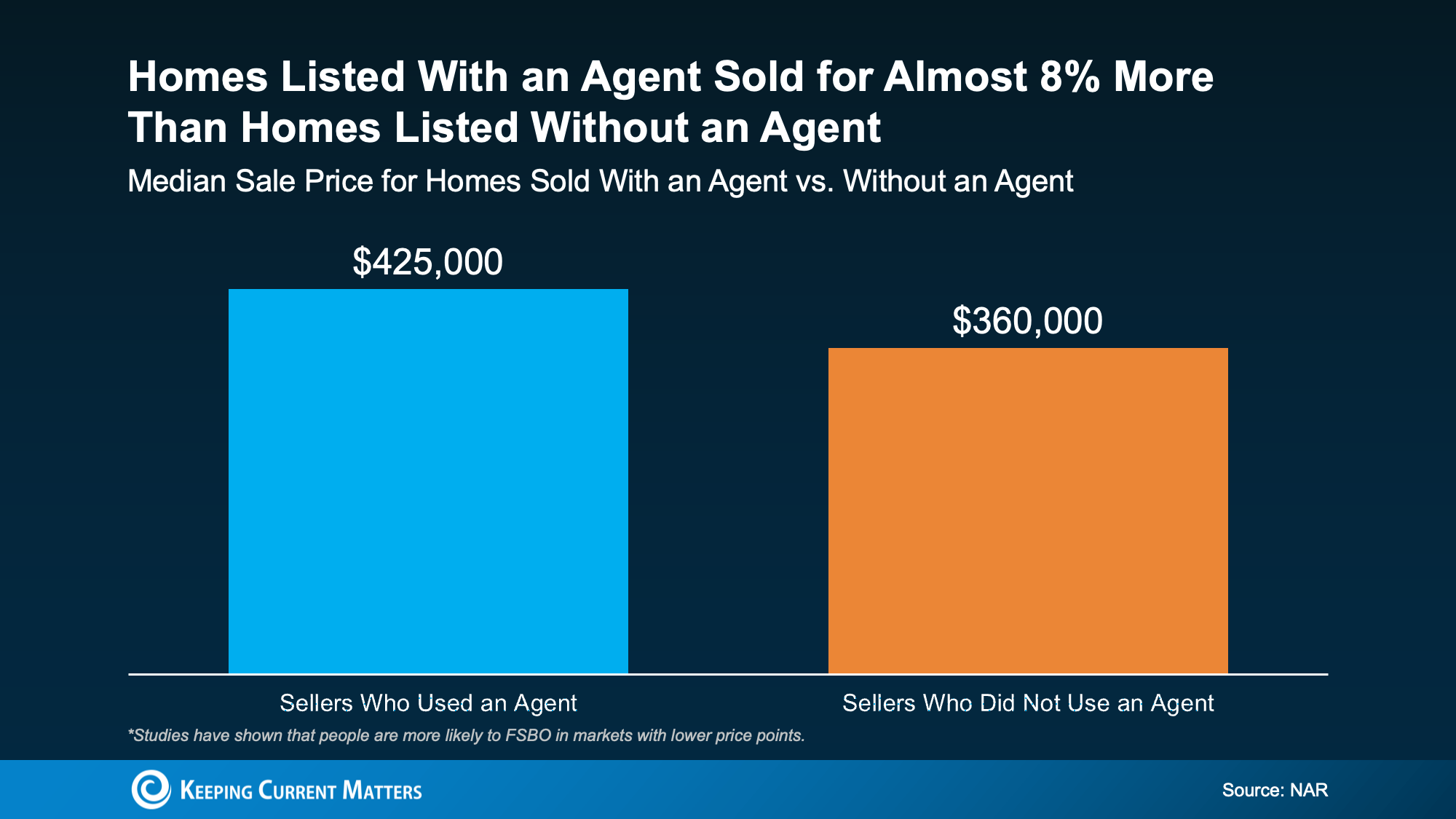
That difference isn’t accidental. Agents bring market expertise—pricing accuracy, preparation guidance, strong presentation, and proper handling of paperwork—all of which play a role in maximizing a home’s value.
While selling without an agent may seem like a way to save money, the data suggests it can actually cost sellers more in the long run.
Bottom Line
Today, the biggest risk of selling without an agent isn’t the paperwork or the workload—it’s getting the price wrong. And once a home is mispriced, fixing it can be difficult.
If you’re thinking about selling and want a realistic idea of what your home could sell for in today’s market, connect with a local real estate professional. A quick pricing conversation now can help you avoid much bigger regrets later.


