
Closing Costs Explained: Updated Breakdowns for Buyers Across the U.S.
If you’re planning to buy a home this year, there’s one important expense you shouldn’t skip over: closing costs.
Most buyers know they’re part of the process, but far fewer understand what they actually include or how much they can vary depending on where you’re buying. Here’s a simple breakdown.
What Are Closing Costs?
Closing costs are the extra fees and payments due when you finalize your home purchase. Every buyer pays them. According to Freddie Mac, these often cover items like homeowner’s insurance, title insurance, and fees for things such as:
Loan application
Credit check
Loan origination
Appraisal
Inspection
Property survey
Attorney services
National vs. Local: Why the Numbers Don’t Always Match
When you research closing costs online, you’ll usually find a nationwide estimate of about 2%–5% of the home’s purchase price. That’s a decent benchmark when you’re budgeting, but it doesn’t paint the full picture.
Actual closing costs can shift based on things like:
Local taxes and fees, including transfer taxes and recording costs
The going rates for services like title work or attorney fees in your area
Yes, the price of the home matters—but state laws, tax structures, and regional service costs also play a big role. That’s why reaching out to local experts early helps you plan ahead and take control of your budget.
To give you a general idea, here’s a state-by-state snapshot of today’s typical closing costs based on median home prices (see map below):
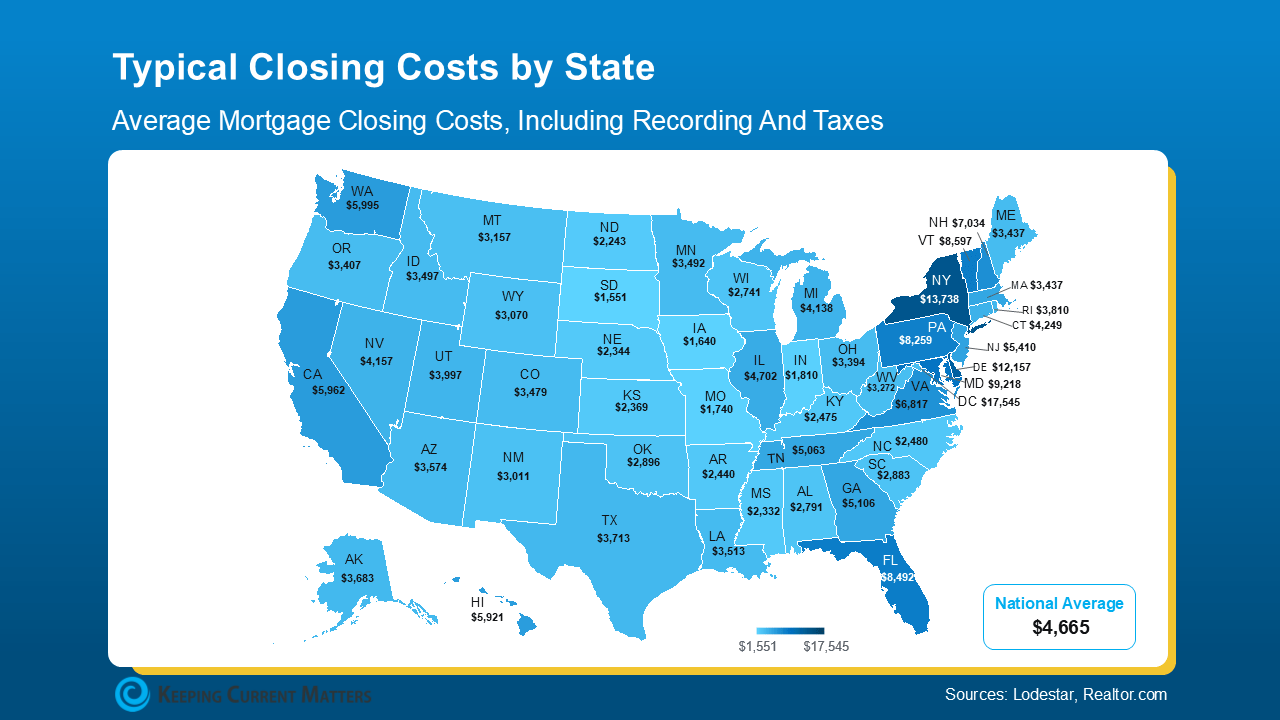
As you can see from the map, some states fall in the $1,000–$3,000 range, while others can push closer to $10,000–$15,000. That’s a big difference—especially if you're a first-time buyer. Knowing what’s normal for your area helps you avoid surprises.
If you want numbers tailored to your situation, talk with a local real estate agent and lender. They can calculate estimated costs based on your loan type, price point, and exact location.
And if you’re wondering whether there’s any way to lower your closing tab, NerdWallet offers a few practical tips:
Negotiate with the seller.Ask for credits or concessions.
Compare insurance providers. Shopping around for homeowner’s insurance can save you money.
Look for assistance programs.Many states and local areas offer grants or help for certain buyers. Your agent and lender can guide you.
Bottom Line
Closing costs are an essential part of buying a home, and they vary more than most people realize. Understanding them—plus knowing ways to reduce them—can help you move forward with confidence.
Talk to a local agent or lender to get a personalized estimate and build a budget that works for you.


